A bed is often chosen primarily for appearance, yet it is one of the most frequently used pieces of furniture in a home. Design, dimensions, structural construction, storage, mattress compatibility, and maintenance all influence how practical the finished bed will be. Evaluating these factors can help when selecting a Designer Bed Manufacturer for a customized bedroom.
In Pune, customers often need beds that coordinate with wardrobes and other interiors while also responding to apartment dimensions and storage requirements.
Start With Mattress Size
The mattress should be decided early because the bed structure needs to accommodate it correctly.
Terms such as king, queen, and double can sometimes be interpreted differently across sellers or brands. Working from exact mattress dimensions avoids confusion.
The overall bed footprint will be larger than the mattress because the headboard, side members, and design details require additional space.
Measure the room before finalizing the outer dimensions.
Check Circulation Around the Bed
An attractive oversized bed can create an uncomfortable bedroom if there is insufficient walking space.
Consider clearance for:
- Wardrobe shutters
- Bedroom doors
- Bedside tables
- Dressing units
- Balcony access
- Drawers or storage mechanisms
- Regular cleaning
Furniture should support movement rather than simply fit within the room mathematically.
Decide Whether Storage Is Actually Needed
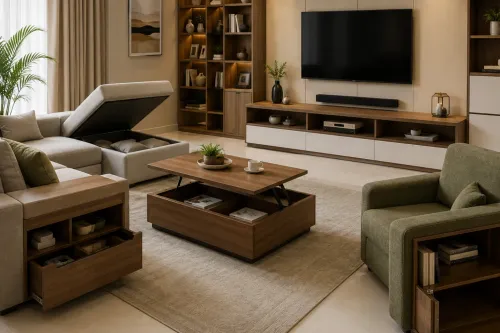
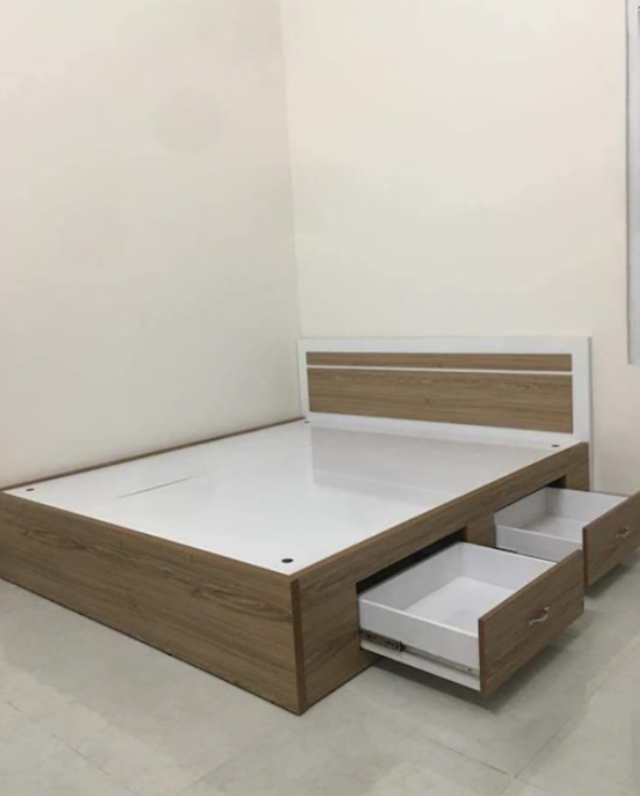
Storage beds are popular because they utilize the area beneath the mattress, but different mechanisms suit different requirements.
Lift-up storage can provide a large compartment for bulky or occasional-use items. Drawer storage can provide more direct access but requires adequate clearance beside the bed.
A non-storage bed may be preferable when under-bed storage is unnecessary or when a lighter visual appearance is desired.
The right option depends on room size and usage rather than popularity.
Evaluate the Headboard as a Functional Element
Designer headboards can establish the visual character of a bedroom, but they should also be comfortable and appropriately proportioned.
Upholstered surfaces can create a softer appearance, while wooden or panelled designs may be easier to coordinate with wardrobes and side tables.
If the bed is positioned near electrical points, switches, or windows, the headboard design should account for them.
Ask About Structural Construction
Visible finishes tell only part of the story.
Customers should ask about the materials used in structural areas, joinery, support system, and installation method. If the design includes upholstery, storage mechanisms, lighting, or other features, understand how those elements can be maintained.
A complex design is worthwhile only when it remains convenient during everyday use.
Coordinate Rather Than Over-Match
Beds, wardrobes, side tables, and dressing units do not need identical finishes. Coordinated proportions and complementary materials often create a more refined bedroom than repeating the same pattern everywhere.
For homeowners in Pune seeking made-to-measure bedroom furniture, Classic Furniture Factory can develop beds and related furniture around specific room dimensions and design requirements.
Selecting a designer bed is ultimately a balance between aesthetics and everyday practicality. Exact measurements, sensible storage, structural considerations, mattress compatibility, and adequate circulation should be resolved before decorative details. That approach creates a bed that contributes to the bedroom visually without compromising comfort or usability.