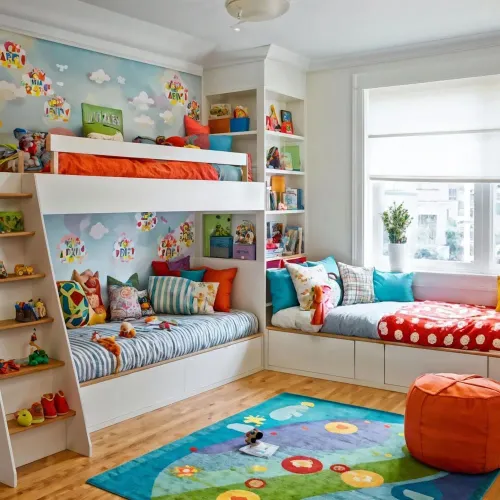
The living room usually performs more functions than any other shared area in a home. It can be a place for conversation, television, entertaining guests, family time, reading, and sometimes even working. Choosing the right Living Room Furniture therefore requires more than matching a sofa with a television unit.
For homes in Pune, Maharashtra, thoughtful furniture planning can be especially valuable when the living area needs to accommodate several activities without appearing overcrowded.
Let the Room Decide the Furniture Scale
One of the most common mistakes is selecting furniture before considering the room proportions.
Large pieces can make a compact living room difficult to navigate. Furniture that is too small, on the other hand, may appear disconnected in a spacious room.
Before making selections, note:
- Room length and width
- Door locations
- Window positions
- Circulation paths
- Television viewing distance
- Electrical points
- Natural light
- Existing architectural features
These factors help establish where furniture can comfortably sit.
Build the Layout Around Everyday Movement
People should be able to enter, leave, and move through the living room without navigating around furniture.
Clear circulation is particularly important when the living room connects the entrance with bedrooms, the kitchen, balcony, or dining area.
Instead of filling every wall, identify the main activity zones. Seating can form a conversation area, while the television unit can occupy another clearly defined zone.
Make Storage Part of the Design
Living rooms often accumulate remote controls, chargers, books, toys, documents, electronic equipment, and decorative objects.
A combination of open and closed storage usually works better than relying entirely on one type.
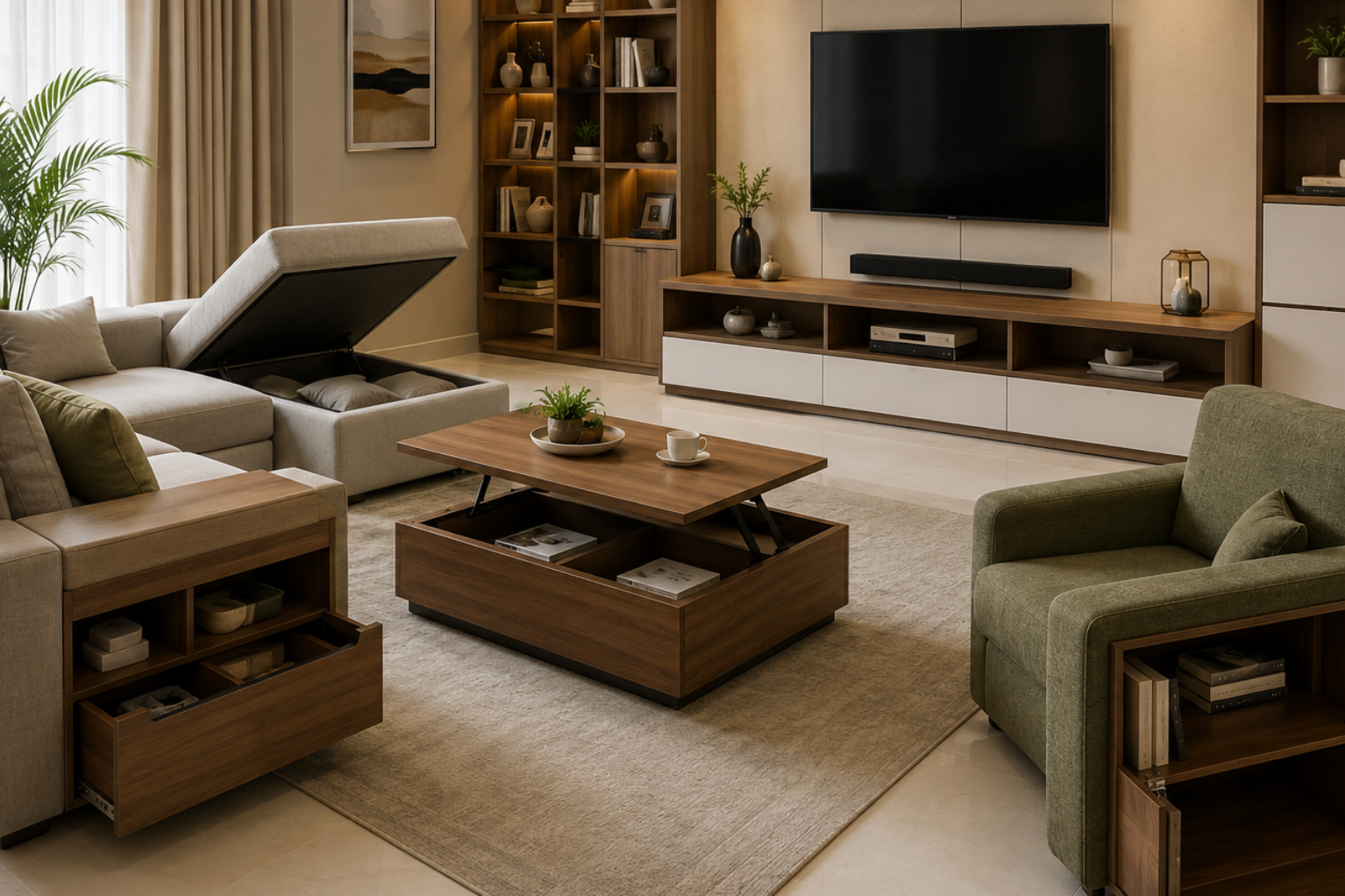
Open shelves can display selected objects, while drawers and closed cabinets keep everyday clutter out of sight. A television console can incorporate equipment storage and cable management without dominating the wall.
Choose a TV Unit According to Technology
Modern television areas need more than a decorative panel.
Before designing the unit, consider the television size, sound system, gaming equipment, router, set-top box, electrical outlets, and cables. Equipment requiring ventilation should not be enclosed without sufficient airflow.
Planning these details early helps avoid visible wires and later modifications.
Consider Multifunctional Furniture Carefully
Space-saving furniture can be useful, particularly in Pune apartments where one room may need several functions.
Examples include storage benches, nesting tables, display-and-storage combinations, and furniture incorporating a compact work area.
Multifunctionality should have a genuine purpose. A complicated feature that is rarely used may add cost without improving the room.
Keep Materials Connected to the Interior
Furniture does not need to match every surface exactly. A more balanced approach is to coordinate colours, textures, proportions, and finishes.
Wood tones can complement neutral walls, while restrained laminates can suit contemporary interiors. Glass and metal details may create visual lightness when used appropriately.
Manufacturers such as Classic Furniture Factory can develop made-to-measure furniture when standard pieces do not suit the dimensions or storage requirements of a living room.
Ultimately, effective living room furniture should make the space easier to use. When scale, movement, storage, technology, and visual balance are considered together, the room can remain comfortable and organized without losing its character.