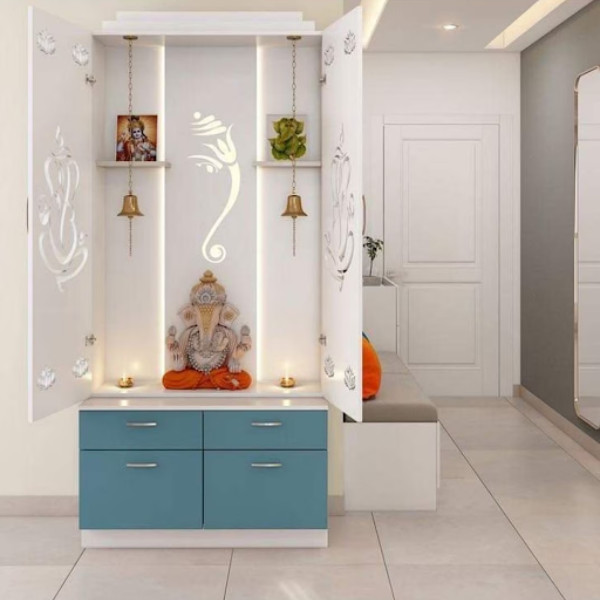
A home mandir often occupies a relatively small area, but its placement and design require careful thought. The unit may need storage for prayer essentials, suitable proportions for idols, ventilation for lamps, easy cleaning, and a visual style that complements the surrounding interior. A Wooden Mandir Manufacturer can adapt these elements when standard units do not suit the available space.
For Pune homes, mandir requirements vary considerably between compact apartments and larger residences with dedicated prayer rooms.
Choose the Location Before the Design
It is easier to design the mandir after identifying its intended position.
Depending on personal practices and the home's layout, the unit may be placed in a dedicated room, living area, dining zone, or another suitable location.
Once the position is established, exact dimensions can be measured. Doors, circulation, nearby furniture, electrical points, and natural ventilation should also be considered.
Determine What the Mandir Needs to Hold
A prayer unit often needs more than a platform for idols.
Before approving a design, list the items that need accommodation, such as:
- Idols and framed images
- Prayer books
- Diyas and lamps
- Incense and accessories
- Flowers and offerings
- Cloth and decorative items
- Daily pooja essentials
Drawers or closed compartments can keep smaller items organized while maintaining a clean appearance.
Proportions Matter in Compact Homes
A large, heavily detailed mandir may overwhelm a small room. Conversely, a very small unit can appear visually lost on a large wall.
Wall-mounted or compact designs can be considered where floor space is limited. Larger floor-standing units may suit homes with sufficient space.
The design should establish a distinct prayer area without interfering with normal circulation.
Material Choices Need Practical Evaluation
The phrase wooden mandir can cover different construction approaches and finishes.
Customers should ask what material is proposed for the main structure, decorative elements, back panel, shelves, drawers, and surface finish. Maintenance is particularly important because prayer areas can be exposed to oil, incense residue, flowers, and frequent cleaning.
If lamps are regularly used, the placement and surrounding materials need appropriate consideration.
Decorative Details Should Support the Interior
Traditional carvings, arches, columns, jaali patterns, bells, and ornamental elements can create a distinctive mandir. Contemporary interiors may benefit from simpler lines and restrained detailing.
Neither approach is inherently better.
The most successful design usually reflects the home's overall character while maintaining the mandir as a recognizable, respectful space.
Lighting Requires Early Planning
Integrated lighting can highlight the prayer area and improve visibility. If lighting is required, electrical provisions should be coordinated before the unit is finalized.
Loose wires and improvised extensions can detract from the appearance and create unnecessary inconvenience.
For Pune homeowners who require a mandir made according to particular dimensions, Classic Furniture Factory can incorporate customized furniture planning into the broader home interior.
A thoughtfully designed mandir combines proportion, storage, materials, maintenance, and visual character. Resolving these practical details before manufacturing can create a prayer space that feels naturally integrated into the home rather than appearing like an afterthought.